Quartz vs Granite Countertops: Which Is Right for Your Calgary Kitchen?

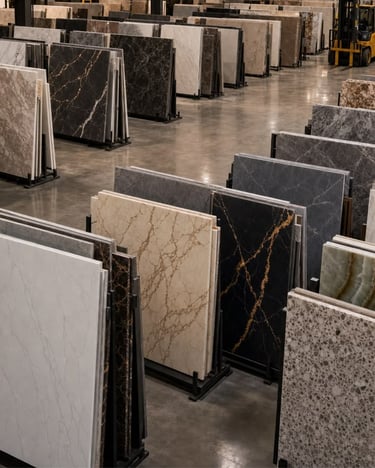
1. Durability & daily wear — Edge: quartz
Quartz: Engineered from roughly 90% crushed quartz and resin, so it's non-porous straight off the line. It resists chipping, staining, and scratching under normal kitchen use, and the surface stays consistent from edge to edge since it's manufactured, not quarried.
Granite: A natural igneous stone that's extremely hard and heat-tolerant, but it is porous until sealed. Left unsealed, it can absorb oil, wine, or coffee and stain. Once properly sealed, it holds up very well to everyday cooking and prep.
Intro
If you're renovating a kitchen in Calgary, Red Deer, or Lethbridge, quartz and granite are almost always the two finalists. Both are premium, both hold their value, and both show up constantly in local kitchen renovations — so the decision usually comes down to how you actually live in your kitchen, not which material is "better" in the abstract. Below, we compare them across the six factors homeowners ask us about most.
2. Maintenance & sealing — Edge: quartz
Quartz: Never needs sealing. A damp cloth and mild soap keeps it looking new, which is the biggest reason busy households and rental-property owners lean quartz.
Granite: Needs resealing roughly once a year, sometimes every two to three years for denser slabs. It's a five-minute job, but it is one more thing to remember.
3. Appearance & pattern — Edge: personal taste
Quartz: Because it's engineered, patterns repeat predictably across large runs — ideal if you want a big island or a run of counters to look perfectly uniform, including marble-look veining without the maintenance of real marble.
Granite: Every slab is genuinely one of a kind, with natural mineral veining and flecking that no two kitchens will ever match exactly. It's the choice for homeowners who want the "this came from the earth" character in their kitchen.
4. Heat resistance — Edge: granite
Quartz: Handles normal cooking heat well, but the resin binder means direct, sustained contact with very hot cookware (straight off the stove) can cause discolouration over time. A trivet is worth the habit.
Granite: Naturally heat-resistant since it's 100% mineral stone, with no resin to affect. It's the more forgiving surface for setting hot pans directly down, though we still recommend a trivet for very high heat.
5. Cost — Edge: depends on the slab
Entry-level quartz and entry-level granite are usually priced within a similar range per square foot installed. Where the cost really diverges is at the premium end — exotic granite slabs and designer quartz colours can both run significantly higher than their standard counterparts. The material category matters less than the specific slab you fall in love with, which is exactly why we recommend a slab-selection consultation before budgeting.
6. Resale value in the Calgary market — Edge: both, if installed well
Both materials are considered premium upgrades by Calgary buyers and appraisers. Granite has long been the traditional "luxury" signal in Alberta listings, while quartz has closed that gap significantly over the past decade as buyers increasingly associate it with low-maintenance, move-in-ready kitchens. Clean seams and professional installation matter more to resale value than which of the two materials you choose.
Both Quartz and Granite countertops are generally considered premium upgrades that appeal to home buyers, which is why they remain the two most requested materials for kitchen renovations in Calgary. Granite has long carried a reputation as the traditional "luxury" countertop, prized for its natural stone character, while Quartz countertops have gained significant ground in recent years for their low-maintenance, move-in-ready appeal to modern buyers. When it comes to countertop resale value, the renovation's overall execution counts too: clean seams and professional installation help protect your investment and make your kitchen show well, regardless of which material you choose.
Inquiries
403-606-2024
328 40 Ave Calgary, AB T2E-2M7
Sales@stonecraftcanada.com
© 2017 Stone Craft Canada-Precision fabrication and installation across Alberta Canada
Precision Countertops